What is Anunnaki?
The Anunnaki are the great gods of ancient Sumerian religion, attested in cuneiform texts from roughly the 3rd millennium BCE. Their ranks include Anu (sky), Enlil (storm and command), Enki (wisdom and water), Inanna (love and war), Utu (sun), and Nanna (moon). Since Zecharia Sitchin's§ The 12th Planet (1976), a second tradition reads the same texts as a literal record of an extraterrestrial civilisation from a planet called Nibiru. Academic Sumerologists and paleocontact researchers draw opposite conclusions from the same cuneiform sources.
What the word actually means
Anunnaki (sometimes Anunna, Anunnaku) is a Sumerian compound. Anu is the sky god; the rest is a possessive suffix. The cleanest literal translation is the offspring of An or those of princely seed. Popular sources sometimes claim it means those who came down from the heavens to Earth, but the Sumerian word for to descend does not appear in the term.
In the cuneiform record, the Anunnaki are the great gods of the pantheon: An (sky), Enlil (storm and command), Enki (water, wisdom, and creator of humans), Ninhursag (mother goddess), Inanna (love and war, later Ishtar), Utu (sun), Nanna (moon). They preside over the cosmic order and distribute the me, the divine decrees by which civilisation runs. They also judge the dead in some texts. They represent the first organised pantheon in the human written record.
The mainstream reading
Academic assyriology treats the Anunnaki as the central deities of the Sumerian and later Mesopotamian religious system. They sit alongside the Greek Olympians or the Hindu Vedic pantheon as the foundational mythology of an ancient civilisation. The texts in which they appear, including the Atrahasis epic, the Enuma Elish, the Eridu Genesis, and the Sumerian King List, are treated as religious literature rather than historical chronicle. Their kinship and conflict narratives are read as the mythology of the world's first urban civilisation.
The Ancient Origins essay Who Were the Anunnaki, Really?↗ is the index's clearest written statement of the textually-disciplined critical position. It is useful as a corrective to the readings below.
The Sitchin reading
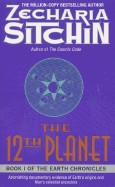
In 1976, Zecharia Sitchin§ published *The 12th Planet*↗, the first volume of what became the seven-volume Earth Chronicles. Working from his own translations of the Sumerian and Akkadian texts, Sitchin argued that the Anunnaki narrative is not mythology but a literal historical record. In his reading, the gods of Sumer were a flesh-and-blood astronaut civilisation from a twelfth body in our solar system called Nibiru, on a 3,600-year orbit. They came to Earth around 450,000 years ago to mine gold. They then genetically engineered Homo sapiens as a worker species to do the mining.
The thesis is laid out in seven volumes: The 12th Planet↗, The Stairway to Heaven↗, The Wars of Gods and Men↗, The Lost Realms↗, When Time Began↗, The Cosmic Code↗, and The End of Days↗. The Lost Book of Enki↗ reconstructs the same narrative as a first-person memoir from Enki's point of view; There Were Giants Upon the Earth↗ is the late companion on the Nephilim. The Anunnaki Chronicles audio reader↗ is the curated entry point into the whole canon. Sitchin's own Anunnaki lecture↗ and the Planet X conversation↗ are the primary recorded sources.
Sitchin's translations are rejected by academic Sumerologists. His readers, and there have been millions, generally hold that the academy reads the texts as it was trained to, and that the literal reading is hiding in plain sight.
The biblical-paleocontact reading
A third reading takes Sitchin's framework as essentially correct but cross-references it with the Hebrew Bible. The argument is that the Elohim of the early biblical text is a plural noun, as the grammar makes obvious, and that the figures it names are continuous with the Anunnaki of the Sumerian sources. The two main exponents are Mauro Biglino and Paul Wallis§.
Biglino, the Vatican's former Italian translator of the Masoretic Hebrew Bible, makes the argument philologically: *The Book That Will Forever Change Our Ideas About the Bible*↗ is the flagship volume; *When We Lived with the Elohim*↗, *The Elohim Made Us Work in Their Gan-Eden*↗ and *In the Mind of Yahweh*↗ are key shorter pieces. Paul Wallis, a former Anglican archdeacon, makes the same argument from a clergyman's perspective: *Escaping from Eden*↗ is the book; *Over 30 Years in the Church, Then I Found the Anunnaki in the Bible*↗, *The Smoking Gun*↗ and *Jesus vs Yahweh*↗ are the key videos.
The southern-African branch
Michael Tellinger extends Sitchin's thesis geographically. His *Slave Species of the Gods*↗ reads the prehistoric stone-circle complexes near Waterval Boven in South Africa as the remnants of an Anunnaki gold-mining infrastructure. The Gaia *Hidden Origins* series↗ is the recorded curriculum. The *Ancient Giants and Human Origins* interview with Paul Wallis↗ and the *Hybrid Humans and Hidden History* long-form↗ are the substantive index pieces.
Anunnaki vs adjacent concepts
Three concepts are commonly conflated with the Anunnaki. The Nephilim§ are the beings of Genesis 6:1–4 who take human wives and produce giant offspring. In paleocontact literature they are often identified with the Anunnaki or their hybrid descendants, but the texts are separate. One is Sumerian, the other is Hebrew, and neither requires the other.
The ancient astronaut theory is the broader category. The Anunnaki thesis is Sitchin's specific version of it, anchored in Mesopotamian sources. Other ancient-astronaut writers such as Erich von Däniken range across world mythology rather than concentrating on Sumer. The Elohim of the Hebrew Bible is a third point of confusion. Mauro Biglino and Paul Wallis§ argue that the plural Elohim of Genesis names the same beings as the Anunnaki. Academic biblical scholarship treats Elohim as a grammatical plural of majesty for the singular Israelite god.
Why the topic persists
The Anunnaki literature has survived fifty years of academic dismissal because it does something the academy has not done. It treats the Sumerian texts as primary sources of comparable seriousness to the Bible or the Vedas, and asks what they would mean read at face value. The face-value reading produces extraordinary claims. It also produces a coherent picture across an unusually wide body of source material. That coherence is part of why readers do not generally find the academy's purely literary reading satisfying.
A reader new to the topic might usefully approach the three readings as three different ways of holding the same primary sources. Learning enough Sumerian and Akkadian context to know what is and is not in those sources helps. The Earth Ancients podcast episode with Matthew LaCroix↗ is the cleanest single audio introduction. The Cinematic Documentary↗ is the longest single visual one.
Last reviewed 2026-05-27
— end of entry —
Working through the vocabulary? Get one entry like this in your inbox each Sunday.